Proactive Well Protection: Routine Pump Maintenance and Well Sanitizing
Pump Maintenance & Well Sanitizing
Our Services
Avoid sudden system failures and safeguard your family’s drinking supply. Our independent, family guided enterprise brings engineering level technical mastery straight to your backyard, optimizing your pump equipment and purifying your private well water before expensive emergencies happen.
Emergency Priority & Dispatch Status
While routine preventative care and shock chlorination sanitizing are typically scheduled maintenance tasks, groundwater infrastructure demands can shift rapidly. We manage our service pipeline with total transparency and direct neighborly care.
- Our Triage Commitment: We prioritize local households experiencing a total loss of running water over routine tune ups and safety inspections. This live status protocol allows us to route our local field teams as efficiently as possible based on immediate human need rather than rigid corporate windows. We thank our scheduled maintenance clients for their patience, knowing we would provide the same emergency priority to their families if their taps ever ran completely dry.
Backyard Realities: Shock Sanitizing & Component Preservation
Textbook hydrogeology guides do not understand the unique geological conditions of the Western Piedmont region. In our local communities, private well water infrastructure faces relentless environmental challenges that require precise, hands on maintenance.
- Fighting Local Soil and Sediment Conditions: Homeowners throughout Rowan County and Cabarrus County frequently deal with thick, heavy red clay that can infiltrate well heads, choking mechanical components and causing premature wear on pump impellers. Meanwhile, properties near Lake Norman are drilled into deep bedrock fractures where surface bacteria can seep into stone cracks after heavy North Carolina storms. Routine physical inspections ensure that well caps are sealed tightly against unwanted pests and sediment intrusion.
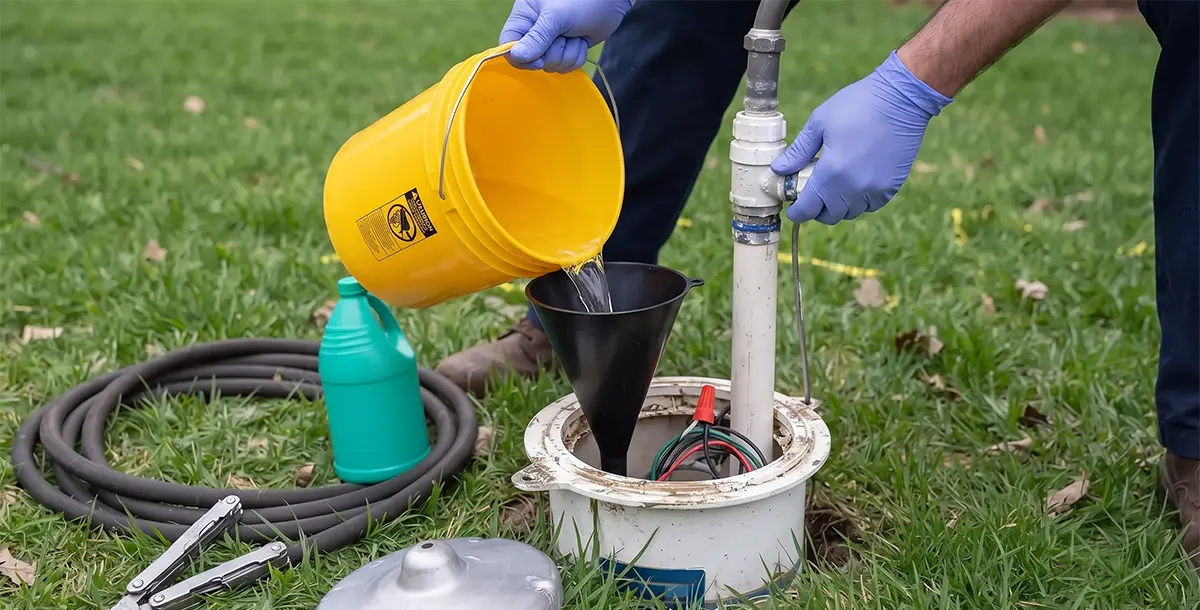
- The Reality of Water Chlorination: Simply throwing a handful of chlorine tablets down your well head is a temporary patch that can damage your down hole equipment. True sanitizing requires calculating the exact water volume inside your well shaft based on its depth and water table level. We precisely apply a balanced sanitizing flush that circulates through your entire plumbing infrastructure, clearing out bacterial growth and iron slime without corroding your subsurface wiring or plumbing manifolds.
Reclaim Your Space: Legacy Tanks vs. Smart Drives
- The Old Way: Traditional setups force you to house a massive 40 gallon to 80 gallon pressurized bladder tank. These steel cylinders clog up valuable space in your crawlspace, utility closet, or garage, and they are highly prone to waterlogging.
- The Modern Intelligent Upgrade: Because a Variable Frequency Drive scales motor speeds on demand, you no longer need to store massive amounts of pressurized water. We replace that bulky cylinder with an inline tank about the size of a small basketball. The smart controller box mounts cleanly to your wall, giving you back your square footage.
Honest, Up-Front Values: The Weber Pump Maintenance Standard
We believe that full well pump replacement should always be treated as a last resort. Legacy operators often push for complete equipment overhauls at the first sign of a sputter, but our team focuses on extending the operating life of your current setup through rigorous diagnostic tuning.
- Electrical Amperage and Draw Analysis: We measure the electrical draw of your submersible motor to catch failing control boxes or internal shorts before they leave you without water.
- Pressure Switch Cleanouts: Fine regional sediment frequently blocks the tiny aperture of your pressure switch, causing the system to misread actual household demand. We clear these passages to restore flawless communication between your tank and pump.
- Storage Tank Drawdown Verification: We test the internal rubber bladder of your pressure tank to confirm it maintains the correct air charge, preventing the rapid cycling that destroys expensive down hole hardware.